September 22, 2026
-
June 15, 2026
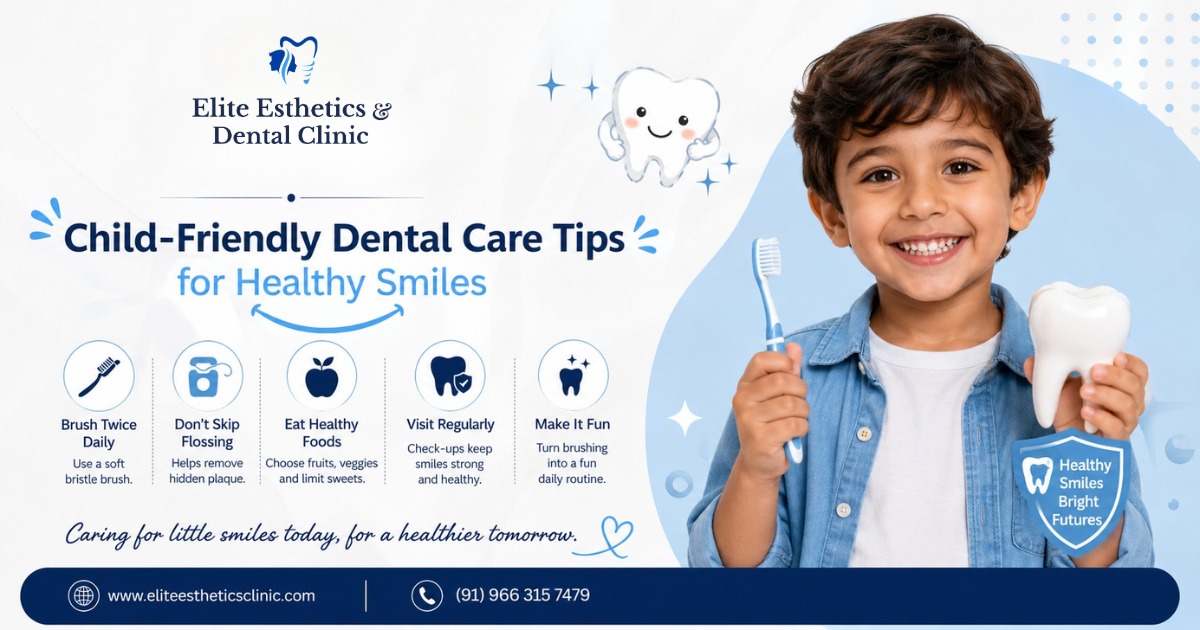
Child-Friendly Dental Care Tips for Healthy Smiles
A healthy smile starts early in life. Good oral hygiene habits developed during childhood can help prevent cavities, gum disease, and other dental problems while promoting strong, healthy teeth for years to come. As a parent, encouraging proper dental care from a young age is one of the best investments you can make in your child’s overall health.
At Elite Esthetics & Dental Clinic, HSR Layout, we believe that dental care should be a positive and enjoyable experience for children. Here are some child-friendly dental care tips to help your little one maintain a bright and healthy smile.
Why Is Dental Care Important for Children?
Many parents assume baby teeth are not as important because they eventually fall out. However, primary teeth play a crucial role in:
- Helping children chew food properly
- Supporting speech development
- Guiding permanent teeth into the correct position
- Maintaining healthy jaw development
- Building confidence through a healthy smile
Proper oral care during childhood lays the foundation for lifelong dental health.
Common Dental Problems in Children
Children can experience several dental issues if oral hygiene is neglected, including:
- Tooth decay and cavities
- Gum inflammation
- Bad breath
- Tooth sensitivity
- Early tooth loss
- Misaligned teeth
The good news is that most of these problems can be prevented with consistent dental care and regular checkups.
Child-Friendly Dental Care Tips
1. Start Dental Care Early
Oral hygiene should begin even before your baby’s first tooth appears. Gently wipe your baby’s gums with a soft, damp cloth after feeding. Once teeth begin to erupt, start brushing with a soft-bristled toothbrush designed for infants.
2. Teach Proper Brushing Techniques
Children should brush their teeth twice daily using fluoride toothpaste.
Teach them to:
- Brush for at least two minutes
- Clean all tooth surfaces
- Use gentle circular motions
- Brush their tongue as well
Parents should supervise brushing until children can brush effectively on their own.
3. Make Brushing Fun
Children are more likely to develop healthy habits when oral care feels enjoyable.
You can make brushing fun by:
- Using colorful toothbrushes
- Playing a favorite song while brushing
- Using reward charts
- Choosing flavored child-friendly toothpaste
- Brushing together as a family
Positive reinforcement encourages consistency and enthusiasm.
4. Encourage Healthy Eating Habits
Diet plays a major role in dental health.
Foods that support healthy teeth include:
- Milk and dairy products
- Fresh fruits and vegetables
- Nuts and seeds
- Eggs
- Water
Try to limit:
- Sugary candies
- Soft drinks
- Sticky snacks
- Excessive chocolate consumption
Healthy eating helps reduce the risk of cavities and strengthens developing teeth.
5. Introduce Flossing Early
Once your child’s teeth begin touching each other, flossing becomes essential.
Daily flossing helps:
- Remove food particles
- Reduce plaque buildup
- Prevent cavities between teeth
- Promote healthier gums
Introducing flossing early helps children develop complete oral hygiene habits.
6. Schedule Regular Dental Checkups
Routine dental visits are important for monitoring your child’s oral health.
Regular checkups help:
- Detect cavities early
- Monitor tooth development
- Prevent future dental issues
- Provide professional cleaning
- Reduce dental anxiety
Most dentists recommend visiting every six months for preventive care.
7. Protect Teeth During Sports
If your child participates in sports activities, a mouthguard can help protect against dental injuries.
Custom-fitted mouthguards reduce the risk of:
- Broken teeth
- Chipped teeth
- Jaw injuries
- Soft tissue damage
Sports protection is an important part of comprehensive dental care.
8. Limit Thumb Sucking and Pacifier Use
While thumb sucking is common among young children, prolonged habits can affect tooth alignment and jaw development.
Parents should work with their dentist to manage these habits if they continue beyond early childhood.
9. Be a Positive Role Model
Children often imitate their parents’ behavior.
When children see parents:
- Brushing regularly
- Flossing daily
- Visiting the dentist
- Following healthy eating habits
They are more likely to adopt these behaviors themselves.
Child-Friendly Dental Care Checklist
| Healthy Habit | Recommended Frequency |
| Brushing Teeth | Twice Daily |
| Flossing | Once Daily |
| Drinking Water | Throughout the Day |
| Dental Checkups | Every 6 Months |
| Toothbrush Replacement | Every 3 Months |
| Healthy Snacks | Daily |
Following this simple routine can significantly improve your child’s oral health.
What Happens If Dental Care Is Neglected?
Poor oral hygiene can lead to:
- Painful cavities
- Tooth infections
- Difficulty eating
- Speech problems
- Premature tooth loss
- Orthodontic issues
- Reduced self-confidence
Early prevention is always easier and less costly than treating advanced dental problems.
Why Choose Elite Esthetics & Dental Clinic, HSR Layout?
At Elite Esthetics & Dental Clinic, we provide compassionate, child-friendly dental care in a welcoming and comfortable environment. Our experienced dental professionals focus on preventive dentistry, early diagnosis, and gentle treatment approaches that help children feel relaxed and confident during their visits.
We are committed to helping every child develop strong oral hygiene habits and maintain healthy smiles for life.
Frequently Asked Questions (FAQs)
When should my child first visit the dentist?
Children should ideally have their first dental visit by their first birthday or within six months after their first tooth appears.
How often should children brush their teeth?
Children should brush twice daily using fluoride toothpaste.
Are baby teeth important?
Yes. Baby teeth help with chewing, speech development, and guiding permanent teeth into place.
How can I prevent cavities in my child?
Encourage proper brushing, flossing, healthy eating, and regular dental checkups.
When should my child start flossing?
Flossing should begin once two teeth start touching each other.
Conclusion
Healthy dental habits established during childhood can last a lifetime. By encouraging proper brushing, flossing, healthy eating, and regular dental visits, parents can help children maintain strong teeth and confident smiles.
If you’re looking for expert pediatric and family dental care, visit Elite Esthetics & Dental Clinic, HSR Layout. Our friendly dental team is dedicated to providing exceptional care for children and helping them enjoy a lifetime of healthy smiles.
Contact Us
📍 Elite Esthetics & Dental Clinic, HSR Layout, Bengaluru
📞 +91 966 315 7479
📧 info@eliteestheticsclinic.com
🌐 www.eliteestheticsclinic.com
🕒 Wed – Mon: 10:00 AM – 7:30 PM
#ChildDentalCare #KidsDentalHealth #HealthySmiles #PediatricDentistry #ChildFriendlyDentist #DentalCareForKids #KidsOralHealth #HealthyTeeth #DentalTipsForParents #CavityPrevention #OralHygiene #FamilyDentistry #ChildrensDentalCare #DentalCheckup #SmileCare #PreventToothDecay #HealthyGums #KidsSmile #ToothBrushing #DentalHealth #OralCareForKids #StrongTeeth #HappySmiles #EliteEstheticsClinic #EliteEstheticsAndDentalClinic #DentistInBangalore #HSRLayout #BangaloreDentist #DentalClinic #FamilyDentalCare #ChildrensOralHealth #ExpertDentalCare #HealthySmileJourney #DentalAwareness #PreventiveDentistry