September 22, 2026
-
September 22, 2026
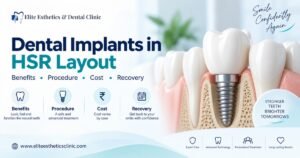
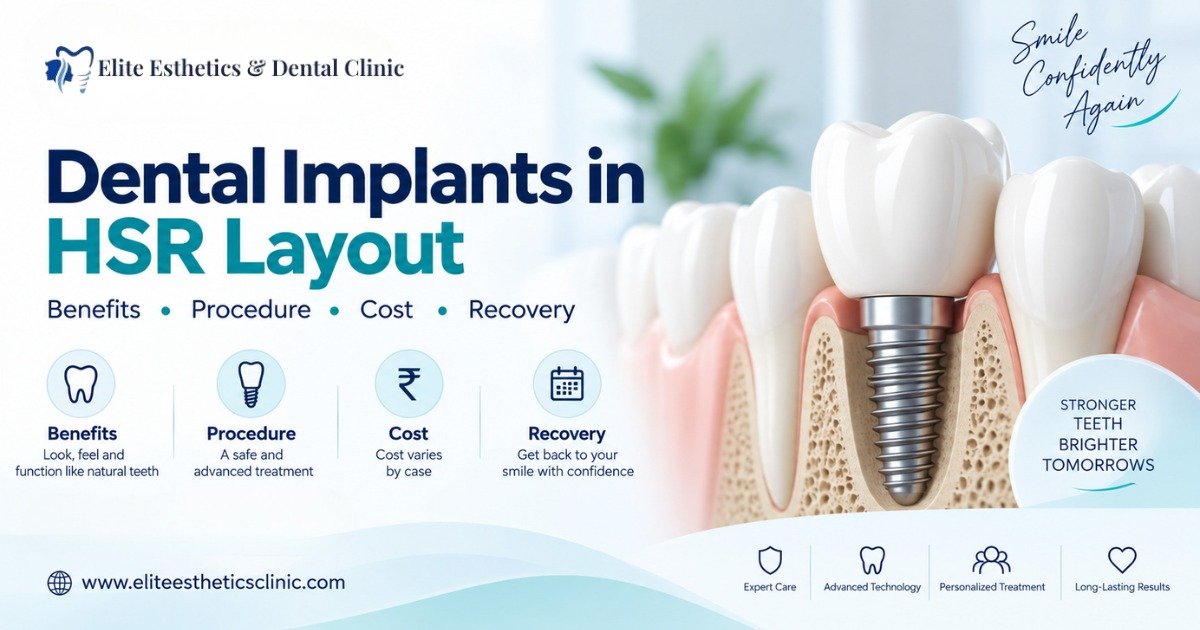
Dental Implants in HSR Layout: Benefits, Procedure, Cost & Recovery
Missing teeth can affect more than just your smile. They can make chewing difficult, affect speech, and sometimes lead to changes in the way your remaining teeth are positioned. Dental implants are a widely used tooth-replacement option that can restore both function and appearance.
If you are looking for Dental Implants in HSR Layout, understanding the procedure, benefits, recovery, and factors affecting the cost can help you make an informed decision.
What Are Dental Implants?
Dental implants are artificial tooth roots, usually made from biocompatible materials such as titanium, that are placed into the jawbone. Once the implant integrates with the bone, it can support a dental crown, bridge, or other restoration.
Unlike removable dentures, implants are designed to provide a fixed tooth-replacement solution and can closely resemble the appearance and function of natural teeth.
Who May Need Dental Implants?
Dental implants may be considered for people who have:
- One or more missing teeth
- Severely damaged teeth that cannot be restored
- Difficulty chewing because of missing teeth
- Loose or uncomfortable removable dentures
- Gaps affecting their smile
- Adequate jawbone support for implant placement
A dental consultation is important because suitability depends on your oral health, bone condition, medical history, and other individual factors.
Benefits of Dental Implants
1. Natural-Looking Appearance
Implant-supported crowns are designed to match the surrounding teeth, helping create a natural-looking smile.
2. Improved Chewing
Replacing missing teeth can make it easier to bite and chew food comfortably.
3. Supports Jawbone
When a tooth is lost, the surrounding bone may gradually shrink. Dental implants can provide stimulation to the jawbone and help reduce this process.
4. Better Oral Function
Implants are fixed in place and do not need to be removed like conventional removable dentures.
5. Long-Term Tooth Replacement
With appropriate care and regular dental checkups, dental implants can provide a durable solution for missing teeth.
Dental Implant Procedure: Step by Step
The implant treatment process generally involves several stages.
Step 1: Dental Examination
The dentist evaluates your teeth, gums, jawbone, and overall oral health. Dental X-rays or 3D imaging may be recommended to assess the implant site.
Step 2: Treatment Planning
A customized treatment plan is prepared based on the number of missing teeth, bone condition, bite, and desired restoration.
Step 3: Implant Placement
The implant is surgically placed into the jawbone at the appropriate location.
Step 4: Healing and Osseointegration
The implant needs time to integrate with the surrounding bone. This process is called osseointegration and can take several weeks or months depending on individual circumstances.
Step 5: Abutment and Crown Placement
Once healing is satisfactory, an abutment may be attached to the implant, followed by a customized dental crown or other restoration.
How Long Does Dental Implant Treatment Take?
Treatment duration varies from person to person. Some patients may complete treatment within a few months, while others may require additional procedures or a longer healing period.
If bone grafting or other preparatory treatment is needed, the overall timeline may be longer.
Your dentist can provide a more accurate timeline after examining your oral health and implant site.
Dental Implant Cost in HSR Layout
The cost of dental implants in HSR Layout can vary depending on several factors, including:
- Number of implants required
- Type and brand of implant
- Crown material selected
- Condition of the jawbone
- Need for bone grafting
- Additional dental procedures
- Complexity of the case
Therefore, there is no single cost that applies to every patient. A dental consultation and treatment assessment are recommended to determine the appropriate treatment plan and expected cost.
Dental Implant Recovery
Some swelling, discomfort, or mild soreness may occur after implant placement. These symptoms are generally managed according to the dentist’s post-treatment instructions.
During recovery, patients may be advised to:
- Follow the recommended diet
- Maintain good oral hygiene
- Avoid smoking or tobacco
- Take prescribed medications as directed
- Avoid putting unnecessary pressure on the treatment area
- Attend scheduled follow-up appointments
Following post-operative instructions can support proper healing.
How to Care for Dental Implants
Dental implants still require regular oral care. Brush twice daily, clean between your teeth using appropriate interdental cleaning methods, and visit your dentist for regular checkups.
Maintaining healthy gums is particularly important because infections around an implant can affect its long-term stability.
Why Choose Elite Esthetics & Dental Clinic?
If you are searching for Dental Implants in HSR Layout, Elite Esthetics & Dental Clinic provides personalized dental care based on individual treatment needs.
The clinic focuses on evaluating your oral health, explaining available treatment options, and developing a treatment plan suited to your dental condition.
Whether you have lost a single tooth or multiple teeth, a professional evaluation can help determine whether dental implants are appropriate for you.
When Should You Consider Dental Implants?
Consider consulting a dentist if you:
- Have one or more missing teeth
- Have difficulty chewing
- Are unhappy with removable dentures
- Want to restore a gap in your smile
- Have a damaged tooth that may require extraction
- Want to understand your long-term tooth replacement options
Early consultation can help identify the available treatment options before further changes occur in the surrounding teeth and bone.
Frequently Asked Questions
Are dental implants painful?
The implant placement procedure is performed under appropriate anesthesia. Some soreness or swelling can occur afterward, but your dentist will provide instructions for managing post-treatment discomfort.
How long do dental implants last?
Dental implants can be a long-lasting tooth-replacement option when properly maintained. Their longevity depends on oral hygiene, general health, bite forces, lifestyle habits, and regular dental care.
Can anyone get dental implants?
Not everyone is immediately suitable for implants. Adequate bone support and healthy gums are important factors. Some patients may require additional treatment before implant placement.
How long does it take to recover from a dental implant?
Recovery varies depending on the procedure and individual healing. The implant also requires time to integrate with the jawbone before the final restoration is placed.
Are dental implants better than dentures?
Implants and dentures serve different needs. Implants are fixed into the jawbone, while dentures can be removable. Your dentist can explain which option is appropriate based on your oral health, budget, and treatment goals.
Conclusion
Dental implants can be an effective option for replacing missing teeth and restoring chewing ability and smile aesthetics. However, implant treatment should be planned after a thorough examination of your teeth, gums, and jawbone.
If you are searching for Dental Implants in HSR Layout, consult Elite Esthetics & Dental Clinic for a personalized evaluation and treatment plan.
📍 Visit Elite Esthetics & Dental Clinic
Elite Esthetics & Dental Clinic
📍 HSR Layout, Bangalore
🌐 www.eliteestheticsclinic.com
Book a consultation to understand whether dental implants are suitable for your dental needs.