September 22, 2026
-
June 13, 2026
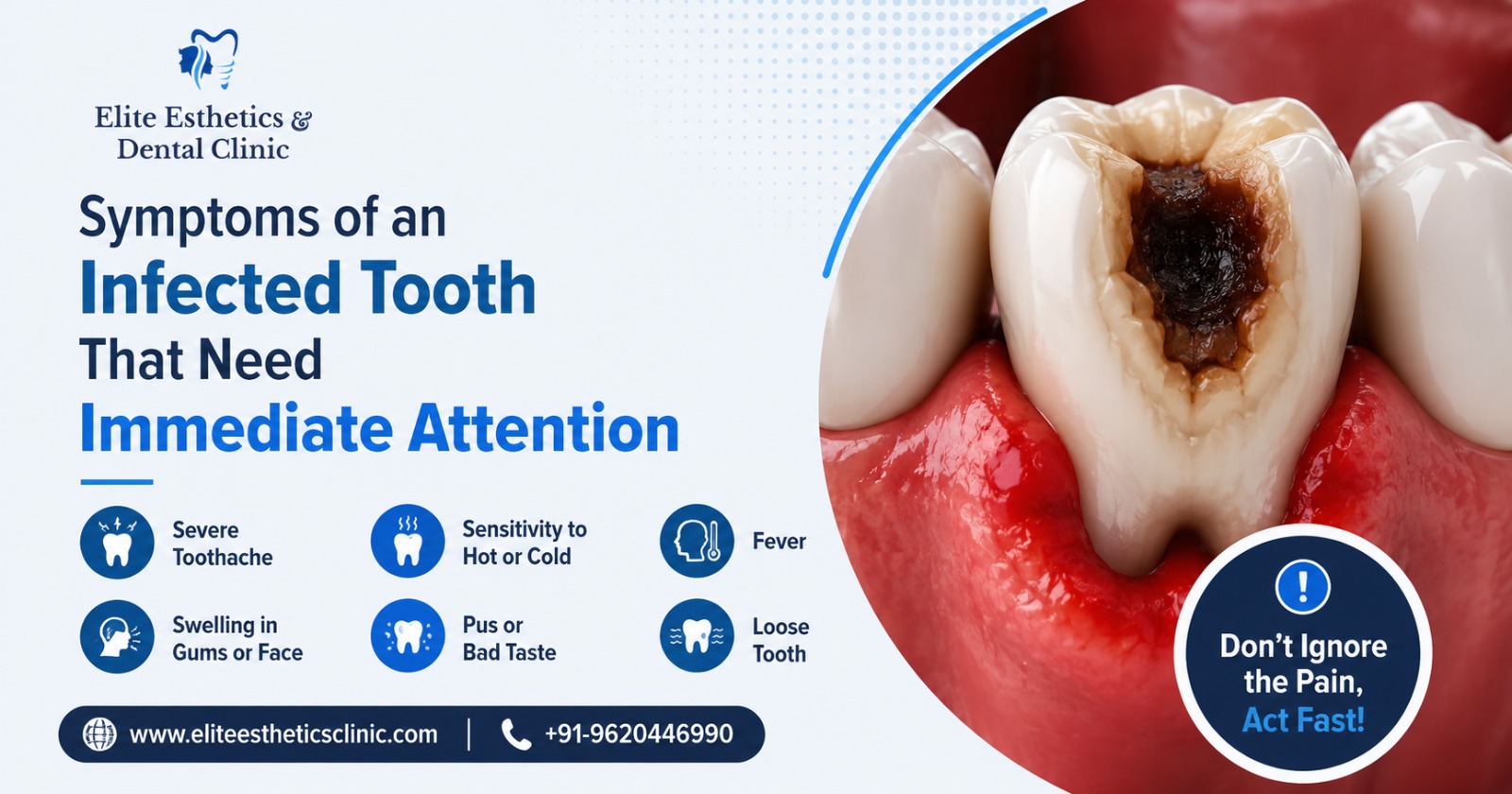
Symptoms of an Infected Tooth That Need Immediate Attention
A tooth infection is a serious dental condition that should never be ignored. What may begin as a mild toothache can quickly progress into a severe infection that affects your gums, jawbone, and even your overall health. Recognizing the early warning signs and seeking prompt dental treatment can help prevent complications and save your natural tooth.
At Elite Esthetics & Dental Clinic, HSR Layout, we provide advanced diagnosis and treatment for dental infections, helping patients achieve relief from pain and restore their oral health.
What Is an Infected Tooth?
A tooth infection, often called a dental abscess, occurs when bacteria enter the inner part of the tooth through cavities, cracks, gum disease, or dental trauma. Once the bacteria reach the tooth pulp, infection develops, causing pain, swelling, and other symptoms.
Without timely treatment, the infection can spread to surrounding tissues and lead to more serious health concerns.
Common Causes of Tooth Infection
Several factors can contribute to a dental infection, including:
- Untreated tooth decay
- Deep cavities
- Cracked or broken teeth
- Gum disease
- Previous dental trauma
- Poor oral hygiene
- Failed dental restorations
Regular dental checkups can help identify these issues before they become serious.
Warning Signs of an Infected Tooth
1. Persistent Toothache
One of the most common symptoms of a tooth infection is a continuous or throbbing toothache.
The pain may:
- Come and go
- Become increasingly severe
- Spread to the jaw, ear, or neck
- Worsen while chewing
Persistent pain is often a sign that the infection has reached the tooth pulp.
2. Sensitivity to Hot and Cold
If you experience prolonged sensitivity after consuming hot coffee, cold drinks, or sweet foods, it may indicate nerve damage caused by infection.
Unlike normal sensitivity, the discomfort often lingers long after the trigger is removed.
3. Swollen or Red Gums
Infected teeth often cause the surrounding gums to become:
- Red
- Tender
- Swollen
- Painful to touch
Gum swelling near a specific tooth should always be evaluated by a dentist.
4. Dental Abscess or Pimple on the Gums
A small bump resembling a pimple on the gums may indicate the presence of a dental abscess.
This bump may:
- Drain pus
- Cause a bad taste in the mouth
- Produce foul-smelling discharge
An abscess requires immediate dental attention.
5. Facial or Jaw Swelling
As the infection progresses, swelling can spread beyond the gums to affect:
- The cheeks
- The jaw
- The face
- The neck
Facial swelling can be a sign that the infection is spreading and should be treated urgently.
6. Pain While Chewing or Biting
Pain during chewing often occurs when inflammation develops around the tooth root.
You may notice:
- Sharp pain when biting
- Pressure sensitivity
- Difficulty eating certain foods
This symptom often indicates advanced infection or damage to the tooth structure.
7. Tooth Discoloration
An infected tooth may become:
- Gray
- Brown
- Dark yellow
Discoloration often occurs when the tooth’s nerve tissue becomes damaged or dies due to infection.
8. Persistent Bad Breath
Bacterial infection inside the tooth can cause:
- Chronic bad breath
- Unpleasant taste in the mouth
- Foul-smelling discharge
If bad breath persists despite brushing and mouthwash, it may indicate an underlying dental infection.
9. Fever and General Illness
A fever is a sign that your body is actively fighting an infection.
Additional symptoms may include:
- Fatigue
- Chills
- Weakness
- Feeling unwell
When fever accompanies dental pain, immediate treatment is necessary.
10. Swollen Lymph Nodes
The lymph nodes beneath your jaw and around your neck may become swollen and tender as your immune system responds to the infection.
This symptom often indicates that the infection is progressing.
Symptoms That Require Emergency Dental Care
Seek immediate dental attention if you experience:
- Severe tooth pain
- Facial swelling
- Difficulty swallowing
- Difficulty breathing
- High fever
- Rapidly increasing swelling
- Pus drainage from the gums
These symptoms may indicate a serious infection that requires urgent treatment.
What Happens If You Ignore an Infected Tooth?
Delaying treatment can lead to serious complications such as:
- Spread of infection to nearby tissues
- Bone loss around the tooth
- Tooth loss
- Gum abscess formation
- Jawbone infection
- More complex and expensive treatments
Early intervention significantly improves treatment outcomes.
Treatment Options for an Infected Tooth
Depending on the severity of the infection, treatment may include:
Root Canal Treatment
Removes infected tissue while preserving the natural tooth.
Dental Crown
Protects and strengthens a treated tooth.
Abscess Drainage
Removes accumulated pus and reduces infection.
Antibiotic Therapy
Helps control bacterial infection when necessary.
Tooth Extraction
Recommended when the tooth cannot be saved.
Your dentist will determine the most appropriate treatment after a thorough examination.
Preventing Tooth Infections
You can reduce your risk of dental infections by:
- Brushing twice daily
- Flossing regularly
- Limiting sugary foods and drinks
- Attending routine dental checkups
- Treating cavities early
- Maintaining good oral hygiene
Prevention is always better than treatment.
Why Choose Elite Esthetics & Dental Clinic, HSR Layout?
At Elite Esthetics & Dental Clinic, we provide comprehensive dental care using advanced diagnostic tools and modern treatment techniques. Our experienced dental team focuses on early detection, pain relief, and effective treatment of tooth infections while prioritizing patient comfort.
Whether you require emergency dental care, root canal treatment, or restorative dentistry, we are committed to helping you achieve optimal oral health and a confident smile.
Frequently Asked Questions (FAQs)
Can a tooth infection go away on its own?
No. A tooth infection requires professional dental treatment and should not be ignored.
Is a tooth infection dangerous?
Yes. If left untreated, the infection can spread and lead to serious health complications.
How do dentists treat infected teeth?
Treatment may include root canal therapy, antibiotics, abscess drainage, or extraction depending on the severity.
What is the first sign of a tooth infection?
Persistent tooth pain is often one of the earliest warning signs.
Can an infected tooth be saved?
In many cases, yes. Early treatment with a root canal can often save the natural tooth.
Conclusion
A tooth infection is a serious condition that requires immediate attention. Symptoms such as persistent toothache, swelling, sensitivity, fever, and bad breath should never be ignored. Seeking prompt treatment can help relieve pain, prevent complications, and preserve your natural smile.
If you are experiencing any signs of an infected tooth, schedule a consultation at Elite Esthetics & Dental Clinic, HSR Layout. Our experienced dental team is here to provide fast, effective, and compassionate care.
Contact Us
📍 Elite Esthetics & Dental Clinic, HSR Layout, Bengaluru
📞 +91 966 315 7479
📧 info@eliteestheticsclinic.com
🌐 www.eliteestheticsclinic.com
🕒 Wed – Mon: 10:00 AM – 7:30 PM
#SymptomsOfAnInfectedTooth #ToothInfection #DentalAbscess #ToothPain #DentalCare #OralHealth #RootCanalTreatment #EmergencyDentist #HealthyTeeth #DentalHealth #ToothacheRelief #GumInfection #DentalClinic #DentistInBangalore #HSRLayout #BangaloreDentist #EliteEstheticsClinic #EliteEstheticsAndDentalClinic #SmileCare #OralCare #PreventToothLoss #DentalTreatment #HealthySmile #ToothSensitivity #GumSwelling #RootCanalTherapy #FamilyDentistry #AdvancedDentalCare #DentalAwareness #ExpertDentalCare