September 22, 2026
-
June 27, 2026
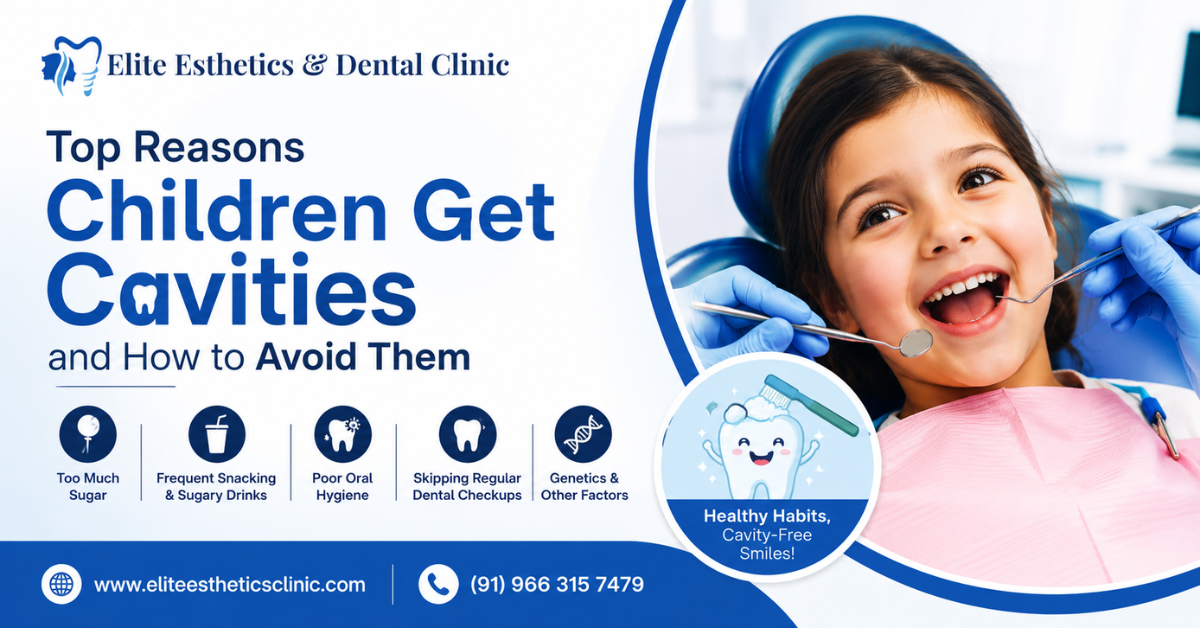
Top Reasons Children Get Cavities and How to Avoid Them
Cavities are one of the most common dental problems affecting children worldwide. While tooth decay is largely preventable, many children develop cavities due to poor oral hygiene habits, unhealthy dietary choices, and lack of regular dental care. Left untreated, cavities can cause pain, infection, difficulty eating, and even affect a child’s overall health and development.
At Elite Esthetics & Dental Clinic, HSR Layout, we believe that prevention is the key to maintaining healthy smiles. Understanding why children get cavities and how to prevent them can help parents protect their children’s teeth and ensure lifelong oral health.
What Are Cavities?
Cavities, also known as dental caries or tooth decay, are permanently damaged areas in the tooth caused by bacteria, plaque, and acids. These acids gradually wear away the tooth enamel, creating small holes or cavities.
Children are particularly vulnerable to cavities because their oral hygiene habits are still developing, and they often consume sugary foods and drinks.
Why Are Baby Teeth Important?
Many parents assume baby teeth don’t require much care because they eventually fall out. However, baby teeth play a crucial role in:
- Proper chewing and digestion
- Speech development
- Maintaining space for permanent teeth
- Supporting healthy jaw growth
- Building confidence through a healthy smile
Protecting baby teeth from cavities is essential for your child’s overall dental development.
Top Reasons Children Get Cavities
1. Excessive Consumption of Sugary Foods and Drinks
Sugar is one of the biggest contributors to tooth decay.
Common cavity-causing foods include:
- Candies
- Chocolates
- Cookies
- Cakes
- Soft drinks
- Fruit juices
- Sweetened milk drinks
When sugar combines with bacteria in the mouth, acids are produced that attack tooth enamel.
2. Poor Brushing Habits
Many children do not brush effectively or regularly.
Common brushing mistakes include:
- Brushing for less than two minutes
- Missing certain tooth surfaces
- Skipping brushing before bed
- Using incorrect brushing techniques
Inadequate brushing allows plaque to build up and increases the risk of cavities.
3. Lack of Flossing
Food particles and plaque can accumulate between teeth where toothbrushes cannot reach.
Without flossing:
- Plaque builds up
- Bacteria multiply
- Cavities develop between teeth
Introducing flossing early helps maintain healthier teeth and gums.
4. Frequent Snacking
Constant snacking gives bacteria more opportunities to produce acid.
Children who snack frequently on sugary foods expose their teeth to repeated acid attacks throughout the day.
5. Poor Oral Hygiene Supervision
Young children often need assistance with brushing and flossing.
Without parental supervision:
- Plaque may not be removed effectively
- Cavities can develop unnoticed
Parents should supervise oral hygiene routines until children can brush properly on their own.
6. Not Visiting the Dentist Regularly
Routine dental checkups help detect early signs of tooth decay before they become serious.
Skipping dental visits may allow cavities to progress unnoticed.
7. Insufficient Fluoride Protection
Fluoride strengthens enamel and helps protect teeth against decay.
Children who do not receive adequate fluoride may be more susceptible to cavities.
8. Going to Bed with a Bottle
Allowing children to sleep with bottles containing milk, juice, or sweetened liquids can lead to “baby bottle tooth decay.”
The sugars remain on the teeth for extended periods, increasing cavity risk.
Signs Your Child May Have Cavities
Watch for symptoms such as:
- Tooth sensitivity
- Tooth pain
- White or brown spots on teeth
- Visible holes in teeth
- Difficulty chewing
- Bad breath
Early treatment can prevent more serious dental problems.
How to Prevent Cavities in Children
1. Encourage Proper Brushing
Children should brush:
- Twice daily
- For at least two minutes
- Using fluoride toothpaste
Parents should supervise brushing whenever necessary.
2. Make Flossing a Daily Habit
Daily flossing removes plaque and food particles from between teeth and helps prevent hidden cavities.
3. Limit Sugary Foods and Drinks
Reduce consumption of:
- Sweets
- Carbonated beverages
- Sugary snacks
- Sticky candies
Offer healthier alternatives whenever possible.
4. Encourage Healthy Snacks
Choose tooth-friendly foods such as:
- Apples
- Carrots
- Cucumbers
- Cheese
- Yogurt
- Nuts
These foods help support strong teeth and healthy gums.
5. Ensure Regular Dental Checkups
Dental visits every six months allow dentists to:
- Detect cavities early
- Perform professional cleanings
- Apply preventive treatments
-
Monitor oral development
6. Promote Drinking Water
Water helps wash away food particles, neutralize acids, and support saliva production.
Encourage children to drink water throughout the day.
7. Consider Dental Sealants
Dental sealants provide a protective barrier on the chewing surfaces of molars, reducing the risk of cavities.
Your dentist can determine whether sealants are appropriate for your child.
Quick Cavity Prevention Checklist
| Healthy Habit | Recommended Frequency |
| Brushing | Twice Daily |
| Flossing | Once Daily |
| Drinking Water | Throughout the Day |
| Dental Checkups | Every 6 Months |
| Healthy Snacks | Daily |
| Fluoride Toothpaste | Twice Daily |
Why Early Prevention Matters
Preventing cavities helps:
- Avoid tooth pain
- Reduce dental treatment costs
- Protect permanent teeth
- Improve overall oral health
- Support healthy growth and development
Healthy dental habits established during childhood often continue into adulthood.
Why Choose Elite Esthetics & Dental Clinic, HSR Layout?
At Elite Esthetics & Dental Clinic, we provide child-friendly dental care in a welcoming and comfortable environment. Our experienced dental professionals focus on preventive dentistry, early diagnosis, and personalized treatment plans to help children maintain healthy, cavity-free smiles.
We are committed to educating families and helping children develop lifelong oral hygiene habits.
Frequently Asked Questions (FAQs)
At what age should my child start brushing?
Oral hygiene should begin as soon as the first tooth appears.
How often should children visit the dentist?
Most children should visit the dentist every six months.
Are baby teeth cavities serious?
Yes. Untreated cavities in baby teeth can affect speech, eating, and permanent tooth development.
What foods help prevent cavities?
Foods rich in calcium and fiber, such as cheese, yogurt, apples, and carrots, support healthy teeth.
Can cavities in children be prevented completely?
While no method guarantees complete prevention, proper oral hygiene and regular dental care greatly reduce the risk.
Conclusion
Cavities are common among children, but they are largely preventable with the right habits and dental care. By encouraging proper brushing, flossing, healthy eating, and regular dental checkups, parents can help their children maintain strong teeth and healthy smiles.
If you’re concerned about your child’s dental health or want preventive dental care, visit Elite Esthetics & Dental Clinic, HSR Layout. Our friendly dental team is dedicated to helping children enjoy healthy, cavity-free smiles for life.
Contact Us
📍 Elite Esthetics & Dental Clinic, HSR Layout, Bengaluru
📞 +91 966 315 7479
📧 info@eliteestheticsclinic.com
🌐 www.eliteestheticsclinic.com
🕒 Wed – Mon: 10:00 AM – 7:30 PM
#ChildDentalCare #CavityPrevention #KidsDentalHealth #HealthySmiles #PreventToothDecay #ChildrensOralHealth #DentalCareForKids #PediatricDentistry #HealthyTeeth #KidsOralHealth #DentalTipsForParents #CavityFreeSmile #FamilyDentistry #OralHealth #DentalHealth #SmileCare #EliteEstheticsClinic #EliteEstheticsAndDentalClinic #DentistInBangalore #HSRLayout #BangaloreDentist #DentalClinic #PreventiveDentistry #HealthyGums #DentalCheckup #StrongTeeth #HappySmiles #DentalAwareness #ExpertDentalCare #HealthySmileJourney