September 22, 2026
-
July 14, 2026
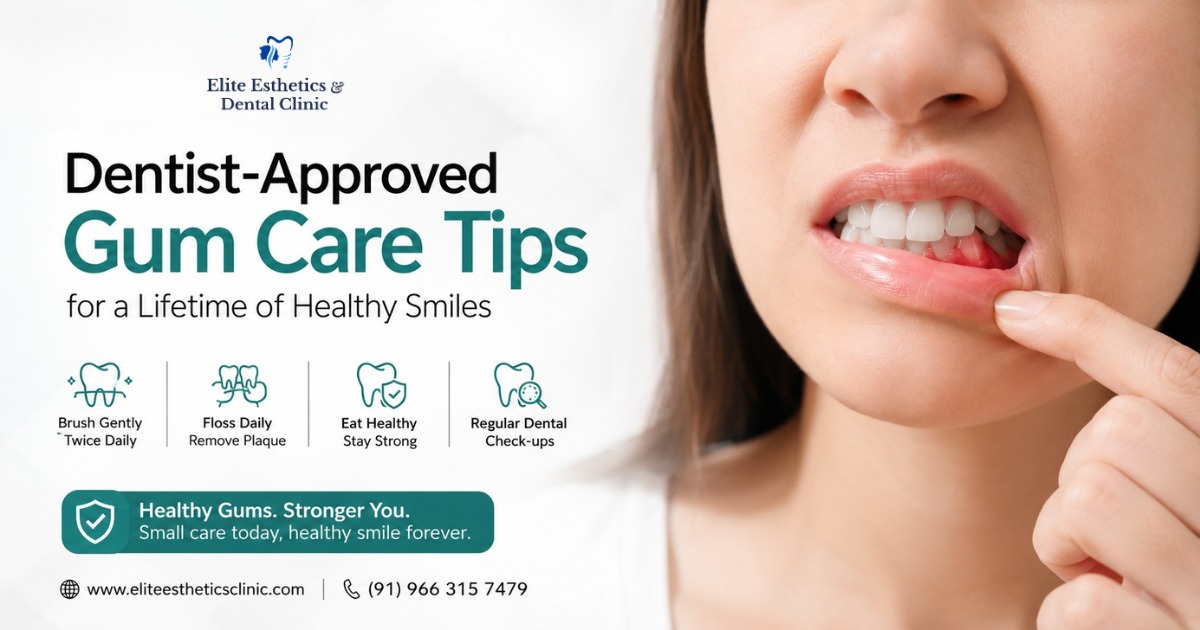
Dentist-Approved Gum Care Tips for a Lifetime of Healthy Smiles
Healthy gums are the foundation of a healthy smile. While many people focus on keeping their teeth clean and white, gum health is just as important. Strong, healthy gums support your teeth, protect them from infection, and contribute to your overall well-being. Unfortunately, gum disease often develops silently, with mild symptoms that are easy to overlook.
At Elite Esthetics & Dental Clinic, HSR Layout, we believe that preventive dental care is the key to lifelong oral health. By following these dentist-approved gum care tips, you can reduce your risk of gum disease and enjoy a confident, healthy smile for years to come.
Why Is Gum Health Important?
Your gums play a vital role in supporting your teeth and protecting the underlying bone. Healthy gums help:
- Hold teeth firmly in place
- Prevent bacterial infections
- Reduce the risk of tooth loss
- Support fresh breath
- Improve overall oral health
- Contribute to better overall health
Research has also shown that gum disease may be linked to health conditions such as diabetes, heart disease, and pregnancy complications, making gum care even more important.
Common Signs of Unhealthy Gums
Watch for these early warning signs:
- Bleeding while brushing or flossing
- Red or swollen gums
- Persistent bad breath
- Tender gums
- Receding gums
- Loose teeth
- Pain while chewing
- Pus around the gum line
If you notice any of these symptoms, schedule a dental checkup as soon as possible.
10 Dentist-Approved Gum Care Tips
1. Brush Your Teeth Twice a Day
Brushing removes plaque, bacteria, and food particles that can lead to gum disease.
For healthy gums:
- Brush for at least two minutes.
- Use a soft-bristled toothbrush.
- Hold the brush at a 45-degree angle toward the gums.
- Replace your toothbrush every three months.
Proper brushing protects both your teeth and gums.
2. Floss Every Day
Flossing removes plaque from between the teeth and below the gumline where toothbrushes cannot reach.
Daily flossing helps:
- Prevent gum inflammation
- Reduce plaque buildup
- Lower the risk of cavities
- Maintain healthy gums
Skipping flossing allows bacteria to accumulate in hard-to-reach areas.
3. Use Fluoride Toothpaste
Fluoride strengthens tooth enamel while helping prevent tooth decay.
Choose a dentist-recommended fluoride toothpaste for daily use to protect both your teeth and gums.
4. Rinse with an Antibacterial Mouthwash
A good antibacterial mouthwash helps:
- Reduce harmful bacteria
- Freshen breath
- Minimize plaque
- Support healthy gums
Use mouthwash as part of your daily oral hygiene routine—not as a substitute for brushing and flossing.
5. Eat a Balanced Diet
Nutrition plays an important role in gum health.
Choose foods rich in:
- Vitamin C
- Calcium
- Vitamin D
- Fiber
- Antioxidants
Include:
- Fresh fruits
- Green leafy vegetables
- Dairy products
- Nuts
- Whole grains
A healthy diet helps strengthen your gums and supports healing.
6. Limit Sugary Foods and Drinks
Excess sugar encourages bacterial growth, leading to plaque formation and gum disease.
Reduce your intake of:
- Soft drinks
- Candy
- Cakes
- Sugary snacks
- Sweetened beverages
Drinking water after meals also helps remove food particles and acids.
7. Avoid Smoking and Tobacco
Smoking significantly increases the risk of gum disease by reducing blood flow to the gums and slowing healing.
Quitting tobacco can:
- Improve gum health
- Reduce bad breath
- Lower the risk of tooth loss
- Improve overall health
8. Stay Hydrated
Water helps wash away food debris and bacteria while encouraging saliva production.
Saliva naturally protects your teeth and gums by neutralizing harmful acids.
Aim to drink plenty of water throughout the day.
9. Schedule Regular Dental Checkups
Professional dental examinations help detect gum disease before it becomes severe.
Routine visits allow your dentist to:
- Remove plaque and tartar
- Check for early gum disease
- Monitor oral health
- Provide personalized advice
Most people benefit from a dental checkup every six months.
10. Don’t Ignore Bleeding Gums
Many people assume bleeding gums are normal—they’re not.
Bleeding during brushing or flossing is often an early sign of gingivitis.
Early treatment can prevent the condition from progressing to advanced periodontal disease.
Foods That Promote Healthy Gums
Add these foods to your diet:
- Oranges
- Strawberries
- Spinach
- Broccoli
- Yogurt
- Cheese
- Almonds
- Carrots
- Apples
- Green tea
These foods provide vitamins and minerals that support healthy gums and teeth.
Habits That Can Damage Your Gums
Avoid these common mistakes:
- Brushing too hard
- Skipping flossing
- Smoking
- Excessive sugar consumption
- Ignoring dental checkups
- Teeth grinding
- Using tobacco products
Healthy habits make a significant difference in long-term gum health.
Quick Gum Care Checklist
| Healthy Habit | Recommended Frequency |
| Brushing | Twice Daily |
| Flossing | Once Daily |
| Mouthwash | Once or Twice Daily |
| Drinking Water | Throughout the Day |
| Dental Checkups | Every 6 Months |
| Professional Cleaning | Every 6 Months |
Why Choose Elite Esthetics & Dental Clinic, HSR Layout?
At Elite Esthetics & Dental Clinic, we provide comprehensive preventive dental care to help patients maintain healthy teeth and gums for life. Our experienced dental team uses advanced technology to diagnose gum disease early and provide personalized treatment plans that promote long-term oral health.
Whether you need a routine dental cleaning, gum disease treatment, or preventive dental advice, we are committed to delivering exceptional care in a comfortable and welcoming environment.
Frequently Asked Questions (FAQs)
Why do my gums bleed when I brush?
Bleeding gums are often an early sign of gingivitis caused by plaque buildup. If bleeding continues, consult your dentist.
How often should I get my teeth professionally cleaned?
Most patients should have professional dental cleanings every six months, although some may require more frequent visits.
Can gum disease be reversed?
Early-stage gum disease (gingivitis) can often be reversed with professional cleaning and good oral hygiene. Advanced gum disease requires specialized treatment.
What foods help keep gums healthy?
Foods rich in Vitamin C, calcium, and antioxidants—such as citrus fruits, leafy greens, dairy products, and nuts—support healthy gums.
Is bad breath a sign of gum disease?
Persistent bad breath may be caused by plaque buildup, gum disease, or other dental issues. A dental examination can identify the cause.
Conclusion
Healthy gums are essential for maintaining strong teeth and a beautiful smile. By following these dentist-approved gum care tips, practicing good oral hygiene, eating a balanced diet, and scheduling regular dental checkups, you can significantly reduce your risk of gum disease and enjoy lifelong oral health.
If you’re experiencing bleeding gums, bad breath, or other signs of gum disease, visit Elite Esthetics & Dental Clinic, HSR Layout. Our experienced dental team is dedicated to helping you achieve healthy gums and a confident smile.
Contact Us
📍 Elite Esthetics & Dental Clinic, HSR Layout, Bengaluru
📞 +91 966 315 7479
📧 info@eliteestheticsclinic.com
🌐 www.eliteestheticsclinic.com
🕒 Wed – Mon: 10:00 AM – 7:30 PM
#HealthyGums #GumCare #GumHealth #DentistApproved #HealthySmile #OralHealth #DentalCare #BleedingGums #GumDiseasePrevention #DentalHealth #SmileCare #OralHygiene #PreventiveDentistry #DentalClinic #DentistInBangalore #HSRLayout #EliteEstheticsClinic #EliteEstheticsAndDentalClinic #FamilyDentistry #HealthyTeeth #DentalAwareness #ExpertDentalCare #DentalCleaning #PeriodontalCare #OralCare #BangaloreDentist #DentalWellness #HealthyLifestyle #ConfidentSmile #DentalTips