September 22, 2026
-
July 8, 2026
Root Canal Treatment: Is It Really Painful? Myths vs. Facts
For many people, the words “root canal treatment” bring feelings of fear and anxiety. One of the biggest reasons is the widespread belief that a root canal is extremely painful. However, thanks to modern dental technology and advanced anesthesia techniques, root canal treatment is now a comfortable procedure designed to relieve pain—not cause it.
At Elite Esthetics & Dental Clinic, HSR Layout, we believe that educating patients with accurate information helps them make confident decisions about their oral health. In this blog, we’ll separate the common myths from the facts about root canal treatment.
What Is Root Canal Treatment?
A root canal treatment (RCT) is a procedure used to save a tooth that has been severely decayed, infected, or damaged. Inside every tooth is a soft tissue called the dental pulp, which contains nerves and blood vessels. When bacteria reach this pulp due to deep decay, cracks, or injury, it can cause severe pain and infection.
During a root canal, the infected pulp is removed, the inside of the tooth is cleaned and disinfected, and the canals are sealed to prevent further infection. In most cases, a dental crown is placed afterward to restore the tooth’s strength and function.
Why Do People Need a Root Canal?
Your dentist may recommend root canal treatment if you have:
- Deep tooth decay
- Severe toothache
- Cracked or broken tooth
- Dental abscess
- Swollen gums near a tooth
- Prolonged sensitivity to hot or cold foods
- Tooth discoloration caused by nerve damage
Early treatment helps save your natural tooth and prevents the infection from spreading.
Common Myths vs. Facts About Root Canal Treatment
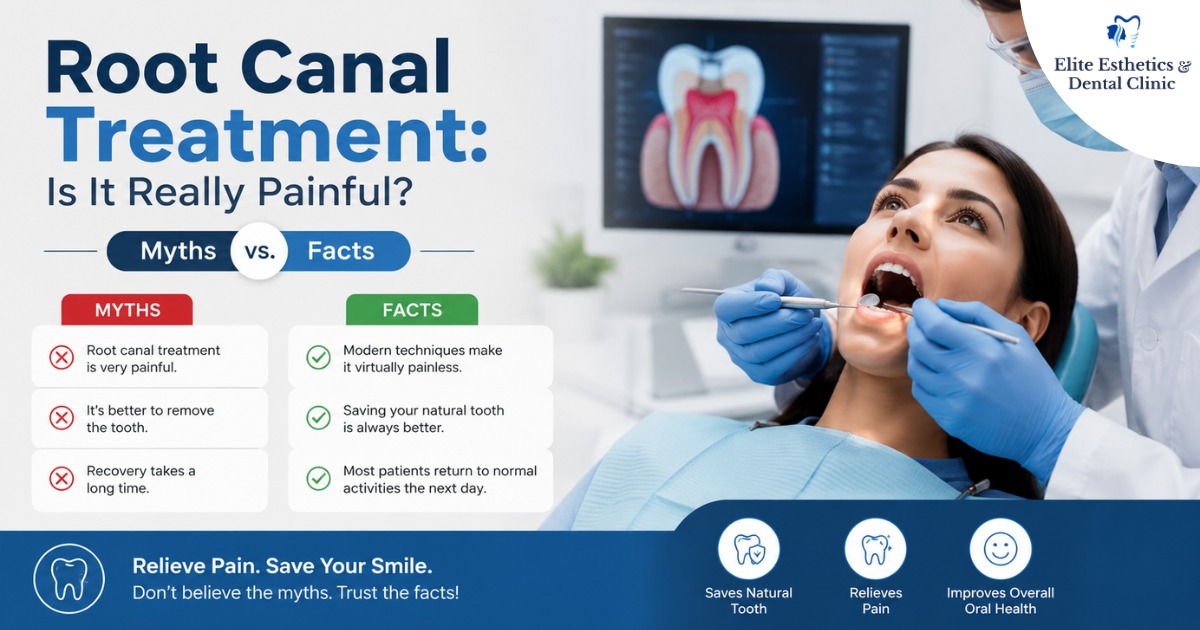
Myth 1: Root Canal Treatment Is Extremely Painful
Fact:
This is the biggest misconception about root canal treatment.
Modern root canal procedures are performed under local anesthesia, making the treatment comfortable and virtually painless. Most patients say that getting a root canal feels similar to having a dental filling.
In reality, the pain usually comes before the treatment because of the infection—not from the procedure itself.
Myth 2: It’s Better to Remove the Tooth Than Save It
Fact:
Whenever possible, dentists recommend saving your natural tooth.
A root canal allows you to:
- Preserve your natural bite
- Maintain proper chewing function
- Prevent neighboring teeth from shifting
- Protect jawbone health
- Avoid more expensive tooth replacement options
Saving your natural tooth is almost always the preferred long-term solution.
Myth 3: Root Canal Treatment Requires Multiple Painful Visits
Fact:
Many root canal treatments can be completed in just one or two appointments, depending on the complexity of the case.
Modern technology has made the procedure faster, safer, and more efficient than ever before.
Myth 4: Root Canal Treatment Causes Illness
Fact:
This myth is based on outdated information that has been scientifically disproven.
There is no scientific evidence that properly performed root canal treatment causes illness elsewhere in the body. In fact, root canal treatment removes infection and helps improve overall oral health.
Myth 5: The Pain Will Go Away on Its Own
Fact:
Ignoring tooth pain rarely solves the problem.
Without treatment, the infection may spread and lead to:
- Severe pain
- Dental abscess
- Bone loss
- Swelling
- Tooth loss
- More complex treatment later
Seeking early dental care can prevent complications and save your tooth.
Signs You May Need a Root Canal
Contact your dentist if you experience:
- Persistent toothache
- Pain while chewing
- Swollen or tender gums
- Sensitivity to hot and cold that lingers
- Tooth discoloration
- Pimple-like swelling on the gums
- Facial swelling
- Bad taste caused by pus drainage
Prompt diagnosis improves the chances of saving your tooth.
What Happens During a Root Canal Procedure?
A typical root canal involves the following steps:
- Examination and digital X-rays.
- Local anesthesia to numb the area.
- Removal of the infected pulp.
- Cleaning and disinfecting the root canals.
- Filling and sealing the canals.
- Placement of a dental crown if needed.
The procedure is carefully performed to eliminate infection while preserving your natural tooth.
Benefits of Root Canal Treatment
Root canal treatment offers several important benefits:
- Relieves severe tooth pain
- Eliminates infection
- Saves your natural tooth
- Restores normal chewing function
- Prevents the spread of infection
- Improves oral health
- Avoids tooth extraction whenever possible
With proper care, a root canal-treated tooth can last for many years.
Recovery After Root Canal Treatment
Most patients recover quickly after treatment.
To support healing:
- Take prescribed medications if advised.
- Avoid chewing hard foods on the treated tooth until fully restored.
- Brush and floss regularly.
- Attend follow-up appointments.
- Maintain routine dental checkups.
Mild discomfort for a day or two is normal and usually resolves quickly.
How Can You Prevent the Need for a Root Canal?
Good oral hygiene can significantly reduce the risk of severe tooth infections.
Healthy habits include:
- Brushing twice daily with fluoride toothpaste
- Flossing every day
- Limiting sugary foods and drinks
- Visiting the dentist every six months
- Treating cavities early
- Wearing a mouthguard during sports
Prevention is always better than treatment.
Why Choose Elite Esthetics & Dental Clinic, HSR Layout?
At Elite Esthetics & Dental Clinic, we provide advanced root canal treatment using modern equipment and patient-focused care. Our experienced dental team prioritizes your comfort and uses the latest techniques to diagnose infections accurately, relieve pain, and preserve your natural teeth.
Whether you have a severe toothache or need expert endodontic care, we are committed to delivering safe, effective, and comfortable treatment in a welcoming environment.
Frequently Asked Questions (FAQs)
Is a root canal more painful than a filling?
No. With local anesthesia, most patients find root canal treatment to be similar in comfort to getting a dental filling.
How long does a root canal take?
Most treatments can be completed in one or two visits, depending on the complexity of the tooth.
Can I eat after a root canal?
Yes, but wait until the numbness wears off. Avoid chewing hard foods on the treated tooth until it is fully restored.
How successful is root canal treatment?
Root canal treatment has a very high success rate, and many treated teeth last for decades with proper care.
What happens if I delay treatment?
Delaying treatment may allow the infection to spread, increasing the risk of pain, swelling, tooth loss, and more extensive dental procedures.
Conclusion
Root canal treatment is one of the safest and most effective ways to save an infected tooth. Despite common myths, the procedure is designed to relieve pain, preserve your natural tooth, and restore your oral health. Modern dentistry has made root canals more comfortable and successful than ever before.
If you’re experiencing persistent tooth pain or think you may need a root canal, don’t delay treatment. Visit Elite Esthetics & Dental Clinic, HSR Layout, for expert diagnosis and compassionate care. Our experienced dental team is here to help you restore your healthy, confident smile.
Contact Us
📍 Elite Esthetics & Dental Clinic, HSR Layout, Bengaluru
📞 +91 966 315 7479
📧 info@eliteestheticsclinic.com
🌐 www.eliteestheticsclinic.com
🕒 Wed – Mon: 10:00 AM – 7:30 PM
#RootCanalTreatment #RootCanalMyths #DentalCare #ToothInfection #RootCanalFacts #PainFreeDentistry #DentalHealth #HealthySmile #OralHealth #Endodontics #SaveYourTooth #DentalClinic #DentistInBangalore #HSRLayout #EliteEstheticsClinic #EliteEstheticsAndDentalClinic #SmileCare #FamilyDentistry #HealthyTeeth #DentalAwareness #ExpertDentalCare #OralCare #RootCanalSpecialist #ToothPainRelief #DentalTreatment #PreventiveDentistry #BangaloreDentist #ModernDentistry #EmergencyDentalCare #ConfidentSmile